
.png)


Breathe Carefully: The Hidden Danger of Hantavirus

Orthohantavirus, commonly called hantavirus, is a family of RNA viruses carried silently by rodents. The animals themselves rarely get sick; humans are essentially accidental, dead-end hosts. Once inside a person, the virus targets the cells lining small blood vessels, causing them to leak fluid into surrounding tissue. Depending on the strain, this can destroy the lungs, the kidneys, or both — and it can do so fast enough to kill within days of the first serious symptom appearing.
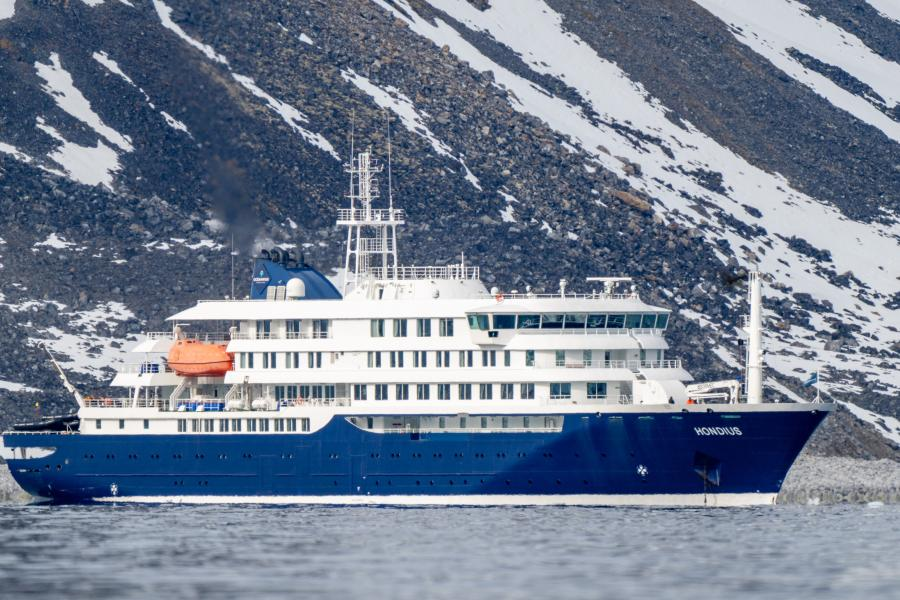
In early April 2026, a Dutch cruise ship called the MV Hondius departed Ushuaia, Argentina, carrying approximately 147 passengers and crew on a 33-day voyage north through the Atlantic. By the time health authorities realized what was happening, three people were dead, cases were spreading across a dozen countries, the CDC had issued a Level 3 emergency response, and the WHO was holding emergency press conferences in Geneva. The culprit was the Andes virus — a rare, rodent-borne pathogen that most of the world had never heard of, and the only hantavirus on earth known to spread directly between people.

The trail of the outbreak begins not on the ship but on land, in the weeks before anyone boarded. Investigators believe the most likely point of origin was a birdwatching excursion to a landfill site on the outskirts of Ushuaia, in the Tierra del Fuego region of southern Argentina's Patagonia. The passengers most strongly linked to the initial exposure were an elderly Dutch couple who had been traveling through Argentina and Chile for months. Landfills are dense with rodents, and the Andes virus is transmitted primarily through inhaling dried particles from infected rodent urine, feces, or saliva — exactly the kind of material disturbed in an outdoor environment populated by rodents. In a detail that alarmed Argentine health officials, Tierra del Fuego had never recorded a case of Andes virus before. Investigators were dispatched to trap and test rodents at the site. The precise moment of exposure has not been confirmed, but the working hypothesis is that one or both members of the couple were infected there, boarded the ship feeling fine — hantavirus has an asymptomatic, or a frame to develop those symptoms period of one to eight weeks — and began developing symptoms at sea.
The first death was the Dutch man, who developed symptoms on April 6 and died five days later. Because his illness presented similarly to other viral infections, hantavirus was not immediately suspected and no samples were taken. His wife, who had unknowingly contracted the virus — either through the same original rodent exposure or through close contact with her husband — continued on with the voyage. She disembarked at Saint Helena, became acutely symptomatic, and on April 25 boarded KLM flight KL592 from Johannesburg to Amsterdam. She was removed from the aircraft before takeoff due to her deteriorating condition and died in a South African hospital later that same day. She had been on the plane for 45 minutes. A third passenger, a German woman, developed symptoms on April 25 and died seven days later; her body remained on board the ship as of May 8, as no port would accept the vessel. By May 2, when the WHO received its first report of the cluster, the picture was becoming clear: this was not a coincidence. This was an outbreak.
The Andes virus is what makes this case so unusual and so alarming to infectious disease specialists. Nearly every other hantavirus strain in existence can only travel from rodents to humans — not between people. The Andes strain is the sole exception, having demonstrated the capacity for limited human-to-human transmission under specific conditions: prolonged close contact, shared enclosed spaces, caregiving without protective equipment. The first confirmed instance of person-to-person Andes transmission was in 1996 in southern Argentina. Scientists learned more about its transmission dynamics after back-to-back super-spreader events in Argentina in 2018 and 2019, which together produced 34 infections and 11 deaths. In one of those events, a single infected person attended a birthday party for 90 minutes while symptomatic and is believed to have infected five other attendees. Another infected woman attended her husband's wake while feverish; ten people who were in close contact with her became ill. A closed ship with shared cabins, dining rooms, and communal spaces is exactly the kind of environment where the Andes virus can move between people.
On May 6, after the vessel had been refused entry to Cape Verde and was anchored offshore awaiting permission to dock elsewhere, virological testing confirmed the strain as Andes virus. By that point, eight cases had been identified — six confirmed, two suspected — with three deaths and one patient critically ill. The ship was ultimately granted permission to dock in Tenerife, in Spain's Canary Islands, on May 10, despite objections from the Canary Islands' regional president. Spain cited its moral and legal obligation to the passengers. WHO Director-General Tedros Adhanom Ghebreyesus was present on the island to oversee the evacuation and reiterate that the risk to the general public on Tenerife was low. Passengers were removed from the ship in small boats, escorted by officials in full protective gear, and loaded onto flights that fanned out across the world.
What followed illustrated just how far a single infected cluster can travel in the modern age. As of May 13, 2026, former passengers were hospitalized or in quarantine in Australia, Canada, France, Germany, the Netherlands, Saint Helena, Singapore, South Africa, Spain, Switzerland, Turkey, and the United States. The U.S. airlifted 17 American citizens from the Hondius to the University of Nebraska Medical Center — one of 13 facilities in the National Special Pathogen System capable of handling high-consequence infectious diseases. Two of those passengers traveled in onboard biocontainment units. One American tested mildly positive for the Andes virus. In France, an evacuee developed symptoms mid-flight and later tested positive. In Canada, 16 individuals were being monitored; four Canadian nationals were flown to CFB Bagotville, Quebec, then transferred to British Columbia for 21 days of self-isolation. Canada banned any Hondius passenger from boarding a flight to Canada after April 1. In the Netherlands, 26 passengers from multiple countries landed in Eindhoven and were placed in six-week self-quarantine. In South Africa, 62 potential contacts of infected passengers were traced; 42 tested negative, and 20 remained unlocated as of mid-May.

The Andes virus, once in the body, causes Hantavirus Pulmonary Syndrome — a disease that progresses with a brutal and deceptive mission. The early phase, lasting roughly the first five days after symptoms appear, looks like the flu: fever, deep muscle aches, headache, nausea, vomiting. Patients often don't seek urgent care. Then the illness pivots. Fluid begins flooding the lungs. Breathing becomes labored. Blood pressure drops. The heart struggles to compensate. Acute respiratory distress syndrome can set in within hours of the respiratory phase beginning, and without intensive mechanical ventilation and hemodynamic support, it is frequently fatal. The case fatality rate for Andes virus is estimated at 20 to 40 percent, sometimes exceeding 50% fatality rate — among the highest of any infectious disease encountered in the Americas. There is no approved antiviral treatment and no widely available vaccine. Survival depends almost entirely on how quickly a patient reaches intensive care and how aggressively they are supported through the critical window.
What makes this outbreak scientifically significant beyond the human tragedy is what it may teach researchers about the Andes virus's transmission dynamics in novel settings. The maritime environment — a closed ship, shared air, communal spaces, weeks at sea — is one in which hantavirus has essentially never been studied. "Because the disease is so incredibly rare, it's been very difficult to study," noted Dr. Charles Chiu of the University of California, San Francisco. "The current outbreak will teach us more, because we've had very few of these events with more than a handful of patients." Whether the transmission on the Hondius was primarily airborne, through direct contact, or some combination remains under investigation. The WHO's top epidemiologist, Maria Van Kerkhove, was emphatic at a May press conference: "This is not the next COVID, but it is a serious infectious disease." Experts across the board stressed that the virus does not have the pandemic potential of a respiratory pathogen like influenza or SARS-CoV-2 — it cannot sustain long chains of community transmission, it requires close and prolonged contact to spread between people, and its natural reservoir remains rodents, not humans.
Still, the Hondius outbreak exposed something important. A birdwatcher visits a landfill in Patagonia. Two weeks later, a virus that has never before appeared in that region boards an international cruise ship. Within days, it has crossed the Atlantic, touched down in a dozen countries, triggered Level 3 emergency responses, and put patients in biocontainment units in Nebraska. The Andes virus did not mutate, did not change, did not become something new. It was simply carried, silently, by people moving through a world that is so connected (airlines, excursions, CRUISES, etc…) — which is exactly how emerging infectious diseases have always traveled, and always will.
Sources: WHO, CDC, Al Jazeera, PBS NewsHour, NBC News, Johns Hopkins Hub, SISMED, Contagion Live. Informational only — not medical advice.


Comments